




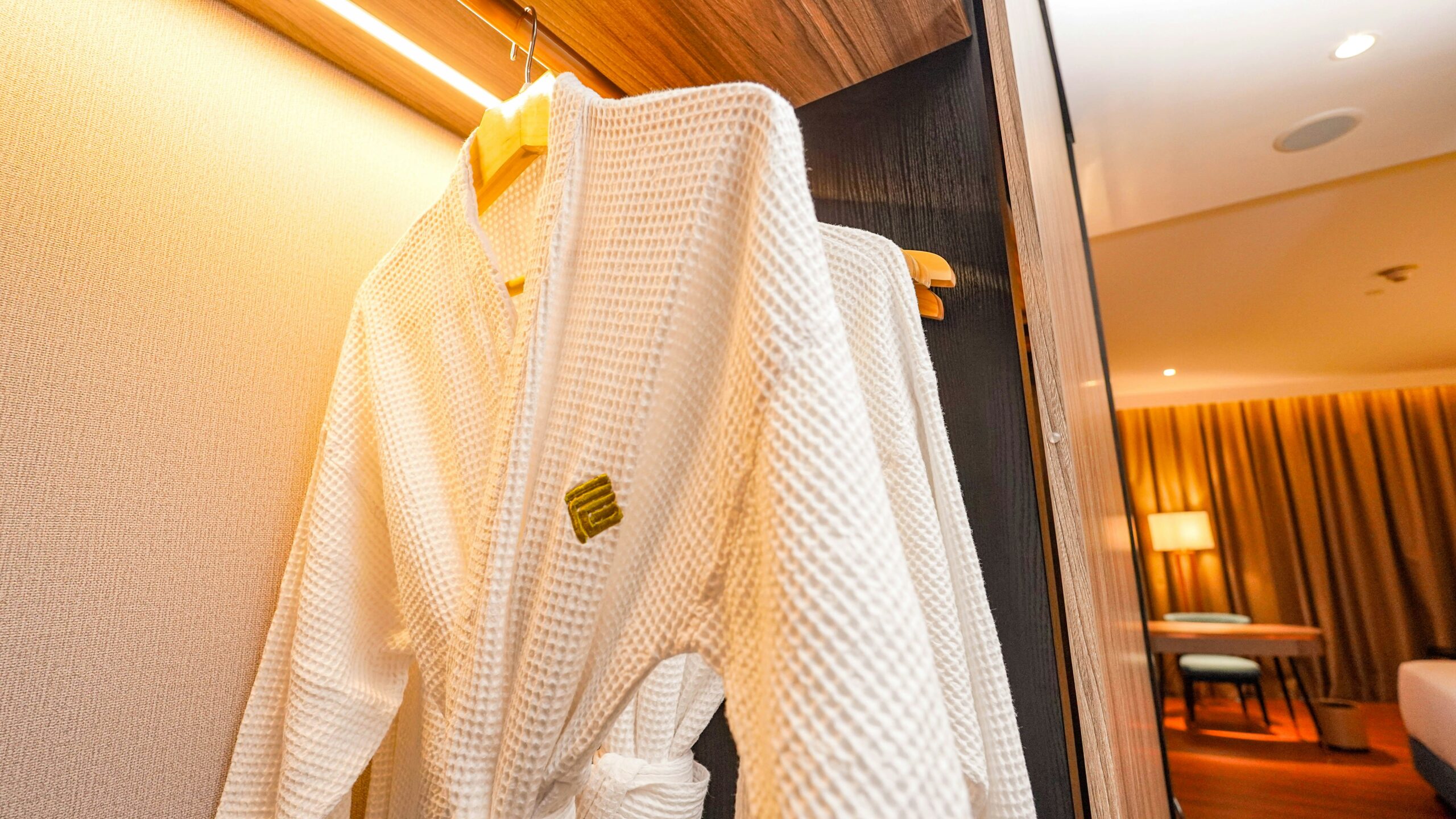
There’s a reason great bathrobes are the thing people remember about a good hotel. It’s not the thread count of the sheets or the brand of the toiletries — it’s the moment after the shower when you put on something heavy, absorbent, and clearly not from your own closet, and the trip officially begins.
That feeling is one of the cheapest pieces of the luxury hotel experience to take home. A genuinely hotel-grade bathrobe costs $40–90 — the hotels themselves buy in this range — and the entire decision comes down to one question most buying guides skip: which fabric matches how you’ll actually wear it?
The Three Robe Types (Pick by Use, Not by Photo)
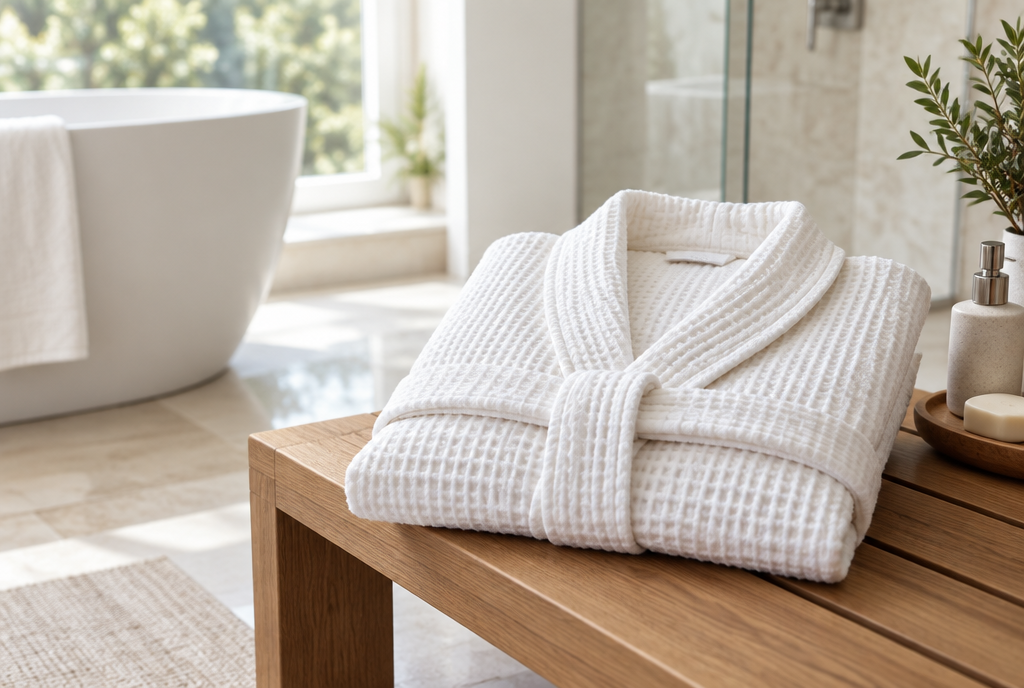
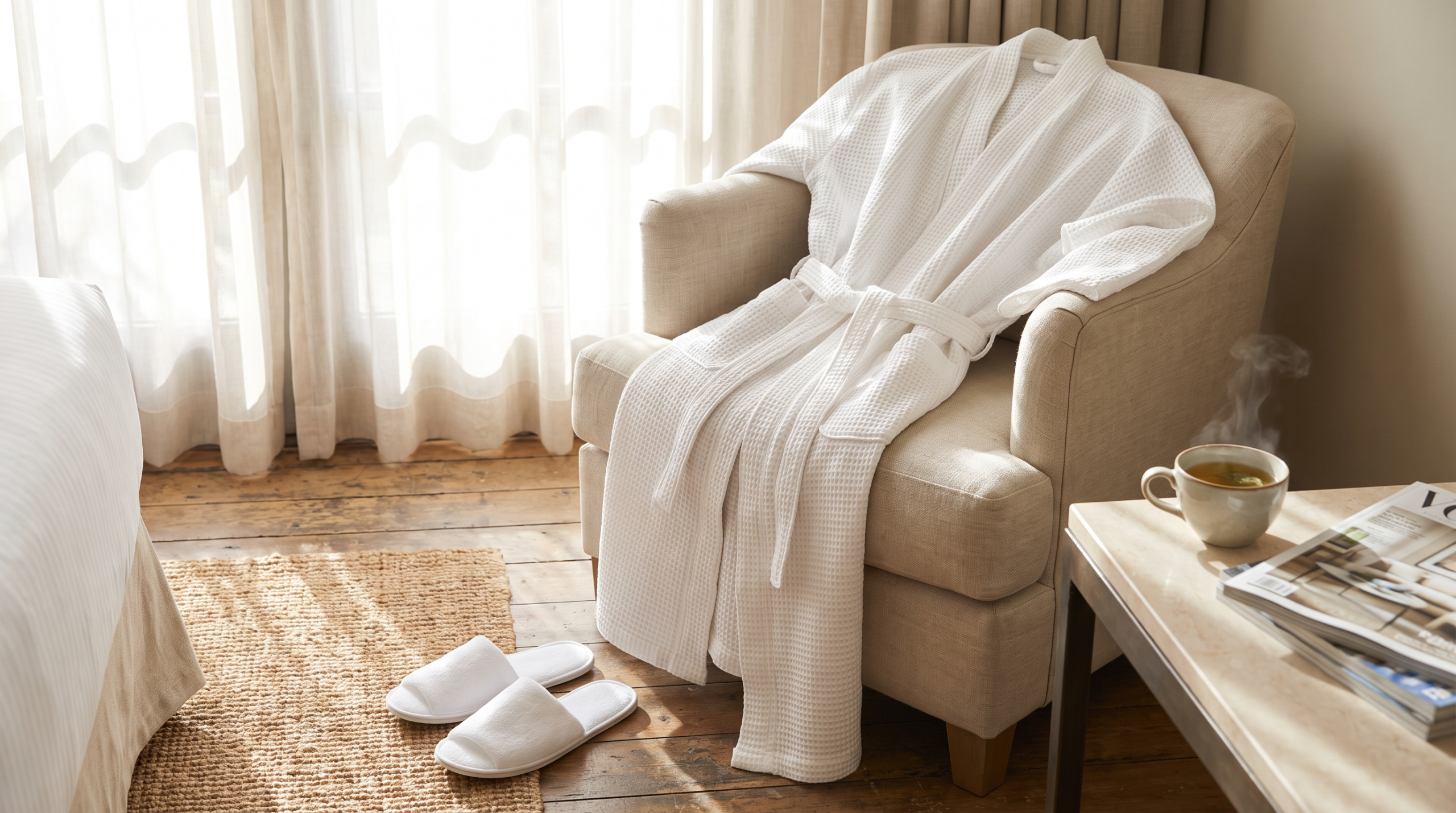
Waffle: the spa robe. Lightweight, quick-drying, with that distinctive honeycomb texture — this is what upscale spas hand you, because it’s absorbent enough after a shower but never hot or heavy. The right choice if you run warm, live somewhere humid, or want a robe you’ll wear for hours, not minutes. Cotton or cotton-dominant waffle drapes best; pure polyester waffle looks the same online and feels like a tablecloth.
Terry: the classic hotel robe. Looped cotton, like being wrapped in a thick towel — because it essentially is one. Maximum absorbency, real weight on the shoulders, the definitive post-shower robe. The best versions are Turkish cotton terry, for the same reason the best towels are: long fibers that stay soft and drink water. The tradeoff is heat and drying time; a heavy terry robe on a hook in a humid bathroom needs a full day to dry.
Plush/fleece: the couch robe. Microfiber plush robes are the coziest of the three and the worst at the actual bathrobe job — synthetic plush absorbs almost nothing and holds odors sooner. As a warm layer for cold mornings and long evenings, excellent, and cheap. As the thing you put on wet, wrong tool. See this plush heavyweight robe on Amazon.
Overall, the honest answer for most people is two bathrobes for two jobs — a waffle or terry for after water, a plush for the couch — but if it’s one, match it to your climate: waffle for warm, terry for cold.
What Quality Actually Looks Like
Robe listings hide the differences in the details, and the details are checkable:
Weight (GSM), stated plainly. Like towels and linen sheets, fabric weight is the honesty number. For terry robes, 350–450 GSM is hotel territory — substantial without being armor. Waffle runs naturally lighter, 250–350 GSM. A listing that won’t state weight is telling you the answer.
Fiber first. 100% cotton for anything that touches wet skin; Turkish cotton is the mark of the best terry. OEKO-TEX certification is the same reasonable baseline here as in bedding.
The unglamorous construction points: double-belt loops (so the belt sits at your waist), a belt that’s sewn on at the back or generously long (hotel robes never lose their belts; cheap robes always do), deep front pockets, and double-stitched cuffs and hem. Shawl collar reads hotel; hood reads beach — both are fine, but the collar is where the “luxury hotel” look lives.
Length matters more than size charts admit. Mid-calf is the hotel standard and flatters nearly everyone; knee-length wears cooler and less formal. When between sizes, size up — a robe that wraps generously is the entire point of a robe.
The Picks, by Situation
Best overall: a mid-weight Turkish cotton terry robe with a shawl collar, ~$50–80. The one that most completely recreates the hotel moment. Look for the GSM, the double-belt loops, and mid-calf length; in that combination, the difference from the robes at a five-star property is the logo. See this Turkish cotton terry robe on Amazon.
Best for warm climates and long wear: a cotton waffle robe, ~$40–60. The spa robe. Dries on the hook in a couple of hours, packs light, and layers over pajamas without overheating. If your bathroom already leans spa, this is the matching garment. See this cotton waffle robe on Amazon.
Best budget: a lightweight cotton terry or cotton-blend waffle, ~$30–40. Fine bathrobes live here — expect lighter fabric and simpler stitching, and check reviews specifically for post-wash reports, since low-end robes fail in the laundry, not the unboxing.
Best gift: matching his-and-hers waffle sets, ~$60–90 the pair. Robes are a perennial gift precisely because almost nobody buys themselves one — which is also the best argument for buying yourself one.
Making It Last
Everything from the towel care rules applies directly — same fiber, same enemies. Wash warm, half the detergent, and absolutely no fabric softener, which turns an absorbent robe into a water-resistant one. Tumble dry low; wool dryer balls keep terry loops fluffy. And between wears, a proper hook with the robe spread — not balled on the door handle — is the difference between a robe that’s fresh for two weeks and one that isn’t.
The Bottom Line
A robe is the rare purchase where the luxury version is genuinely affordable — the hotels found the $40–90 sweet spot decades ago, and there’s no reason to shop outside it in either direction. Waffle if you run warm, Turkish terry if you want the full hotel weight, plush only for dry-land duty.
Finally, good bathrobes are also the natural last step of the everything shower — the routine ends when the robe goes on, and for twenty minutes afterward, your bathroom is a hotel you never have to check out of.
Complete the spa experience with the best bath caddies and a guide to spa bathroom ideas at home.
This post contains affiliate links. If you buy through one of these links, we may earn a small commission at no extra cost to you. We only recommend products we genuinely believe are worth your money.