




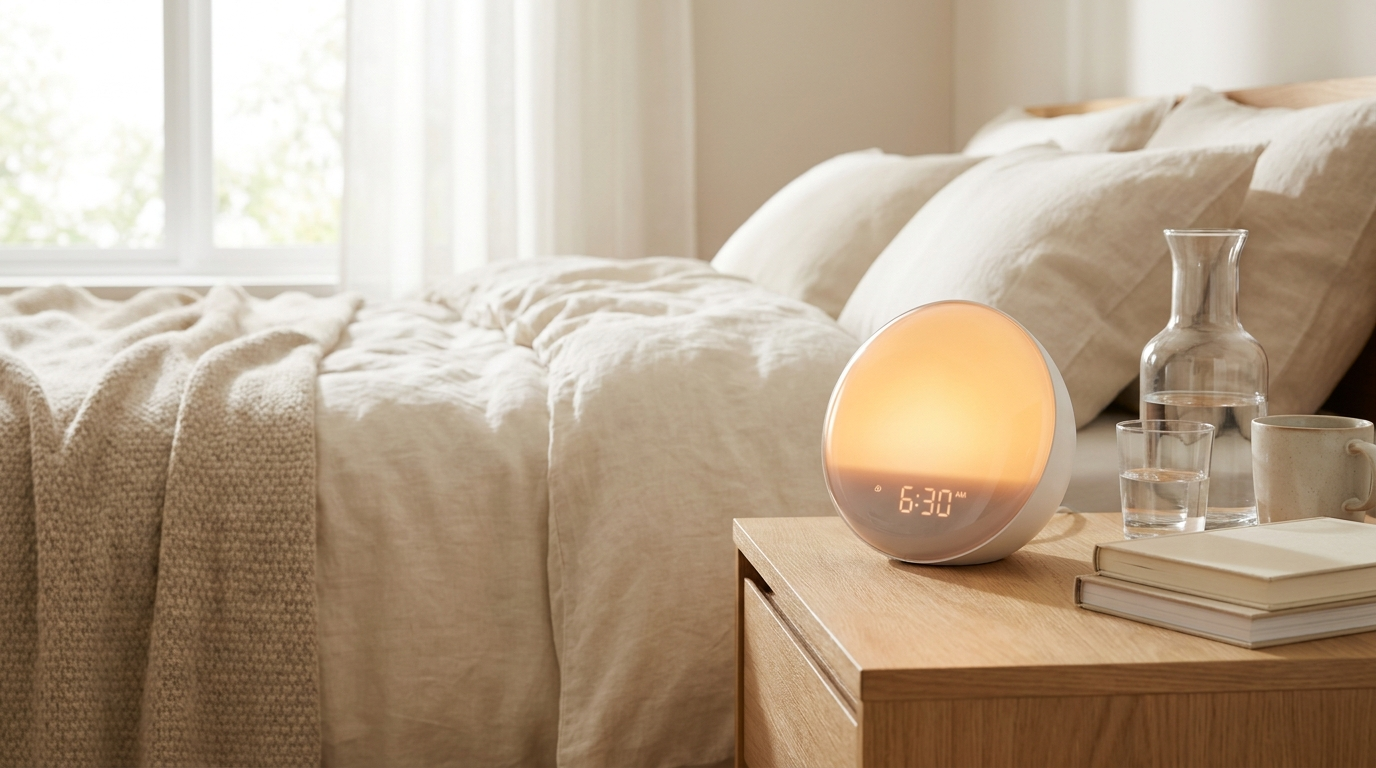
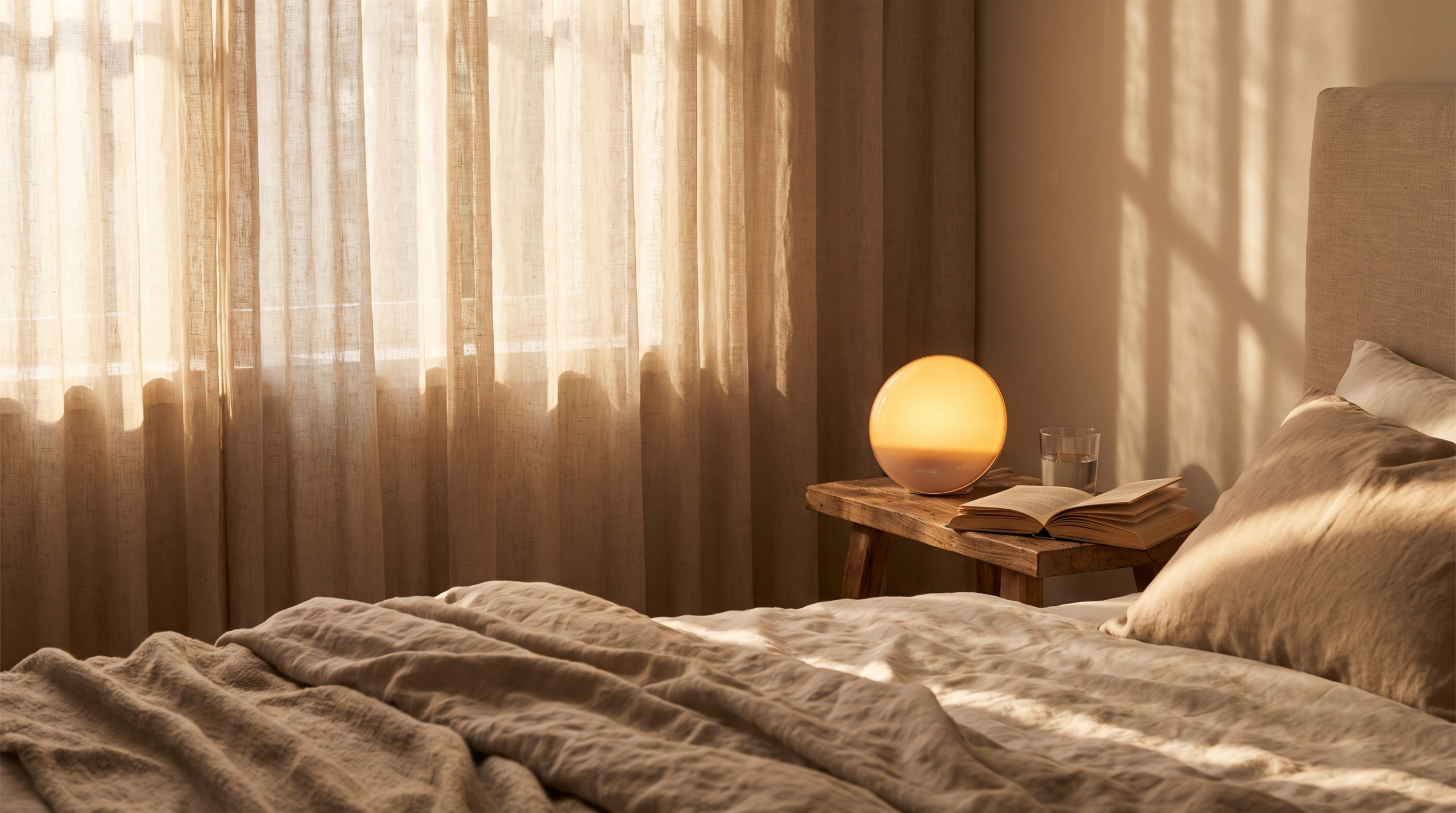
A sunrise alarm clock makes a big promise: instead of being yanked awake by a noise, you’re eased awake by light — a small artificial dawn that brightens gradually on your nightstand for twenty or thirty minutes before your alarm time, so that by the time any sound plays, you’re already surfacing.
It sounds either wonderful or like $60 of wellness theater, depending on your temperament. Having looked hard at both the research and the reviews, the honest answer is: it’s genuinely worth it for some very identifiable people, genuinely pointless for others, and the dividing line is easy to find before you spend anything. Let’s find it.
What It Actually Does (and the Science Behind It)
Your body’s wake-up sequence is light-driven. Morning light suppresses melanin and cues the natural rise of cortisol that makes getting up feel possible rather than violent. A dark bedroom at 6:30 AM gives your body none of those signals — the audio alarm arrives while your brain is chemically still in night mode, which is a decent definition of why mornings feel awful.
Dawn simulation borrows the mechanism. The gradual brightening starts those wake-up processes before the alarm, and the research on this is real, if modest: studies on dawn simulation report easier waking, less of that leaden morning grogginess (the technical term is sleep inertia), and benefits for winter low mood — the technology actually grew out of seasonal effective disorder research. What it does not do is improve your sleep itself, fix a bad bedtime, or replace an actual sunrise. It’s a wake-up tool, not a sleep tool — useful framing for keeping expectations honest.
I love my sunrise alarm clock! Perfect for waking up naturally.
Who It’s Genuinely Worth It For
The pattern in who loves these devices is consistent:
People who wake before the sun or in dark rooms. Winter mornings, blackout curtains, basement bedrooms, night-shift schedules. If your natural wake environment is darkness, you’re the core customer — you’re supplying the dawn your window doesn’t.
People with brutal sleep inertia. If you’re functional the moment you wake, skip ahead. If the first twenty minutes of your day are a swamp, the per-alarm light ramp is aimed squarely at you.
Anyone trying to get the phone out of the bedroom. This might quietly be the strongest argument. The phone stays on the nightstand mostly because it’s the alarm — replace the alarm, and the doom-scrolling both ends of the day loses its anchor. A sunrise clock is a phone-free bedroom’s load-bearing purchase.
Heavy-alarm households. The person who needs waking at 5:45 and the person who doesn’t stop sharing a bed. Light wakes one without detonating the other.
Who Shouldn’t Bother
Equally identifiable: if your bedroom floods with natural morning light, you already own the original. If you wake easily and pleasantly to sound, this solves a problem you don’t have. And if you’re a genuinely deep sleeper who sleeps through noise, be warned that light alone may not wake you — you’ll be relying on the built-in audio anyway, at which point you’ve bought a nicer-sounding alarm with mood lighting. (Still possibly worth it for the sunset wind-down feature — but know what you’re buying.)
What Matters in the Listing
The category runs from $25 to $200, and the spec sheet reading rules are mercifully short:
Ramp length, adjustable. 20–40 minutes of sunrise is the useful range; fixed 10-minute ramps undercut the whole mechanism.
Real brightness with warm color shift. The convincing models start deep amber and brighten toward warm white, and get bright enough to register through closed eyelids (100+ lux at the pillow). Weak single-color Led are where the “gimmick” reviews come from.
A display that actually turns off. A clock that lights the room all night works against the sleep it’s supposed to improve. Full display shutoff or near-black dimming is non-negotiable.
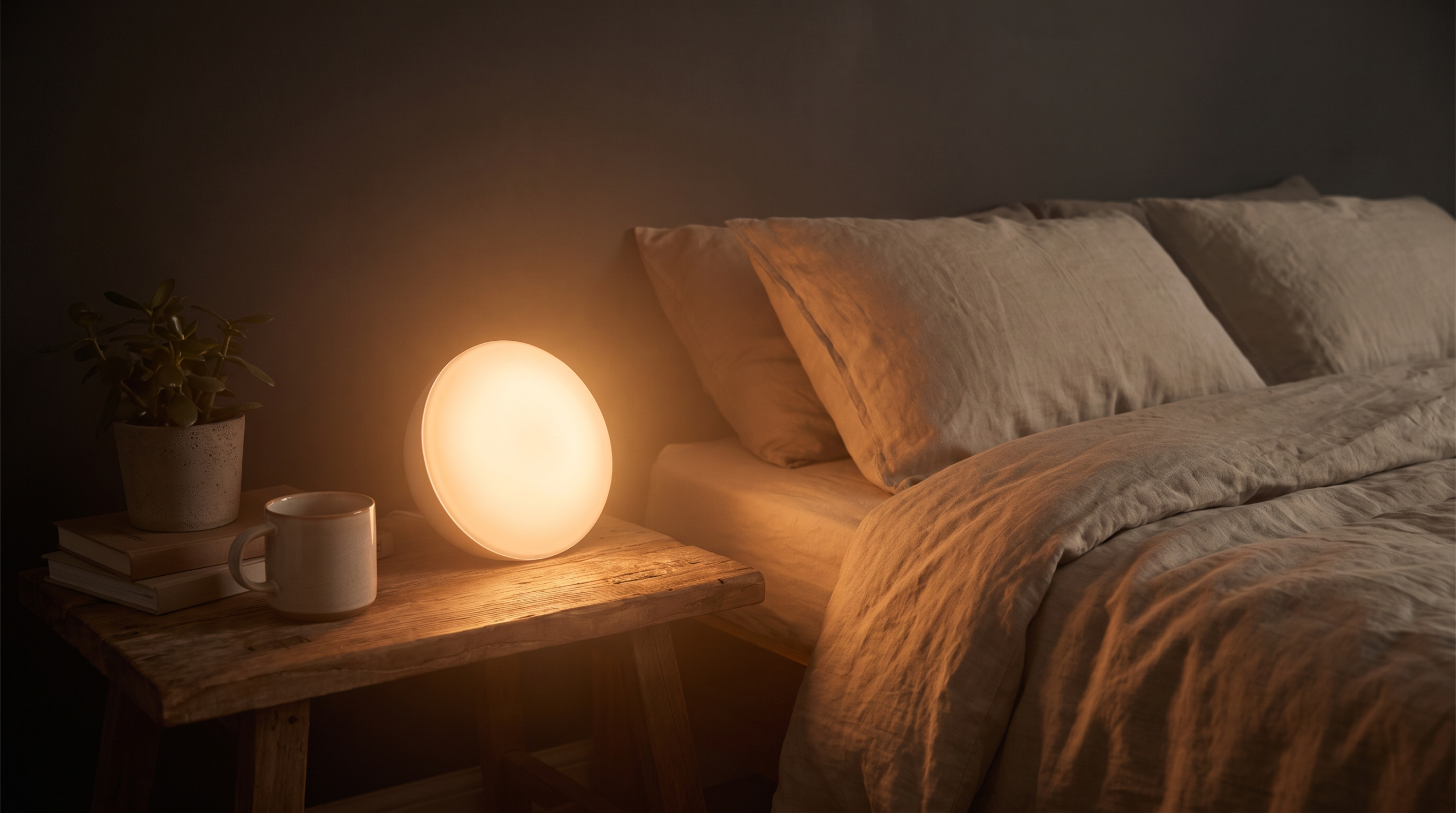
Sunset mode. The same ramp in reverse — light fading over 20–30 minutes at bedtime. Owners consistently rate this the sleeper feature, and it pairs perfectly with a wind-down evening routine.
Sounds you can stand, or radio/aux. The gentle-birdsong library matters more than it seems; you’ll hear it thousands of times.
Mid-range models ($40–70) from established sleep-device brands hit all five requirements; the $150+ tier adds app control and smart-home hooks that change nothing about the core function. The budget tier is a coin flip on brightness — read reviews specifically for “didn’t wake me” complaints.
I love my new alarm clock! Great for setting the mood for my mornings.
The Verdict
Worth it? Yes — if you wake in the dark, wake up hard, or want your phone out of the bedroom. For that overlapping majority, a $50 sunrise clock delivers more felt improvement per dollar than almost anything else on the nightstand — which is why it made our cozy bedroom essentials list. No — if your mornings are bright and easy already. No gadget improves on a window.
One more honest note: the clock softens the wake-up, but the wake-up is still downstream of the bedtime. Pair it with an evening that actually winds down, and the artificial dawn starts to feel like the real thing.
A sunrise clock pairs well with a complete morning routine — and if you’re redesigning your bedroom around better sleep, cozy bedroom ideas on a budget covers the full room.
This post contains affiliate links. If you buy through one of these links, we may earn a small commission at no extra cost to you. We only recommend products we genuinely believe are worth your money.