

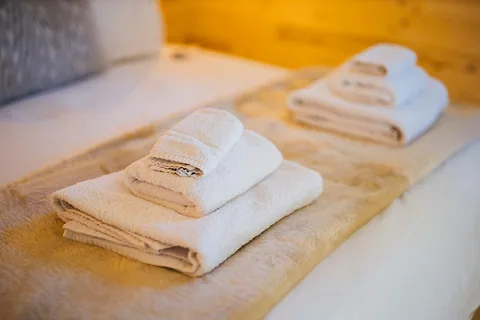

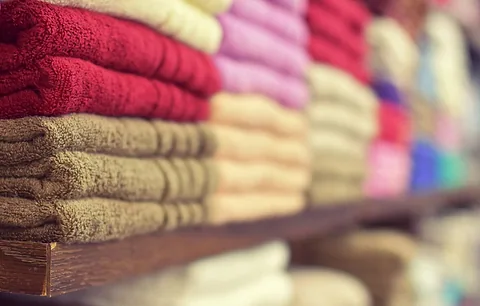




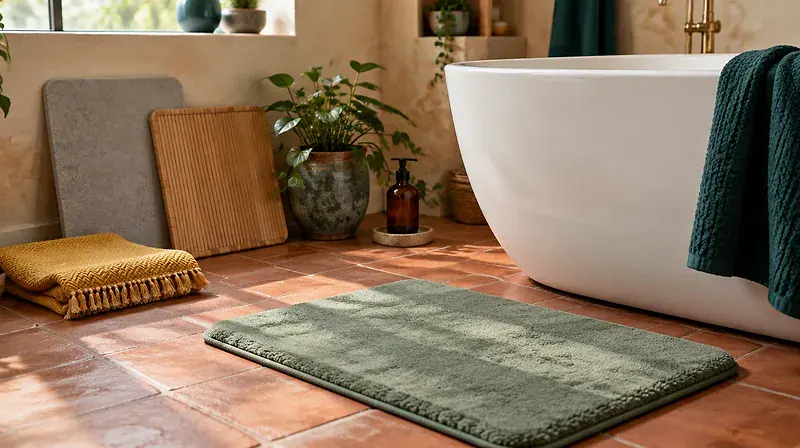
Walk into any luxury hotel and you’ll see one of two things on the towel rack: Turkish Cotton vs Egyptian Cotton. Both are marketed as premium. Both cost more than standard cotton. But they’re fundamentally different products — and the “better” one depends entirely on what you value.
This is the definitive comparison, based on fiber science, not marketing copy.
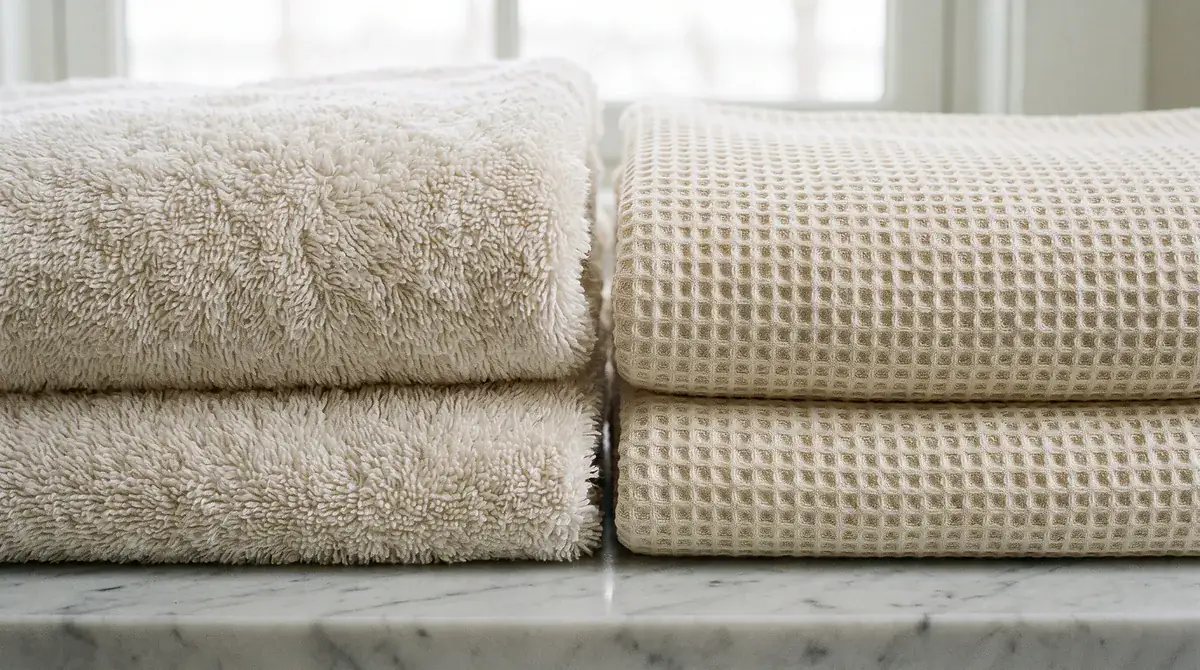
The Basics: What Makes Each Cotton Special?
Both Turkish and Egyptian cotton are long-staple varieties — meaning the individual fibers are longer than standard cotton. Longer fibers create stronger, smoother, more durable yarn. That’s where the similarities end.
Turkish Cotton
- Grown primarily in the Aegean region of Turkey (Denizli province)
- Extra-long staple, low moisture content in the fiber
- Result: lightweight, fast-drying, gets softer with each wash
Egyptian Cotton
- Grown in the Nile Delta region of Egypt
- Extra-long staple, higher moisture absorption capacity
- Result: dense, plush, highly absorbent from the first use
Head-to-Head Comparison
| Feature | Turkish Cotton | Egyptian Cotton |
|---|---|---|
| Softness (new) | Medium | High |
| Softness (after 10 washes) | Very high | High |
| Absorbency | Medium-high | Very high |
| Drying speed | Fast | Slow |
| Weight | Light | Heavy |
| Durability | Very high | High |
| Pilling resistance | Excellent | Good |
| Ideal use | Everyday, travel, hammam | Plush bath experience |
| Price range | $25–80/set | $40–120/set |
When Turkish Cotton Wins
1. You want fast-drying towels
Turkish cotton towels — especially flat-weave peshtemals style — dry 2–3x faster than Egyptian cotton. In humid bathrooms, this matters for hygiene (damp towels breed bacteria faster).
2. You travel or go to the gym
Turkish peshtemals towels pack to the size of a t-shirt. Egyptian cotton towels are heavy and stay damp in your bag.
3. You want towels that improve over time
Turkish cotton gets noticeably softer after the first 5–10 washes. Egyptian cotton tends to plateau earlier and can pill faster under frequent washing.
4. You prefer minimalist bathroom aesthetics
Flat-weave Turkish towels hang elegantly, fold flat, and look architectural on a towel rack. Egyptian cotton looks fluffy — which some love, others find dated.
When Egyptian Cotton Wins
1. You want immediate plush comfort
Egyptian cotton is cloud-like from the first use. Turkish cotton requires a break-in period of several washes.
2. You prioritize maximum absorbency
For post-shower full-body drying, dense Egyptian cotton terry is more efficient in a single pass.
3. You prefer the classic hotel towel experience
Most American luxury hotels use Egyptian cotton terry for their standard towels. If that’s your reference point for “premium,” Egyptian cotton matches the expectation.
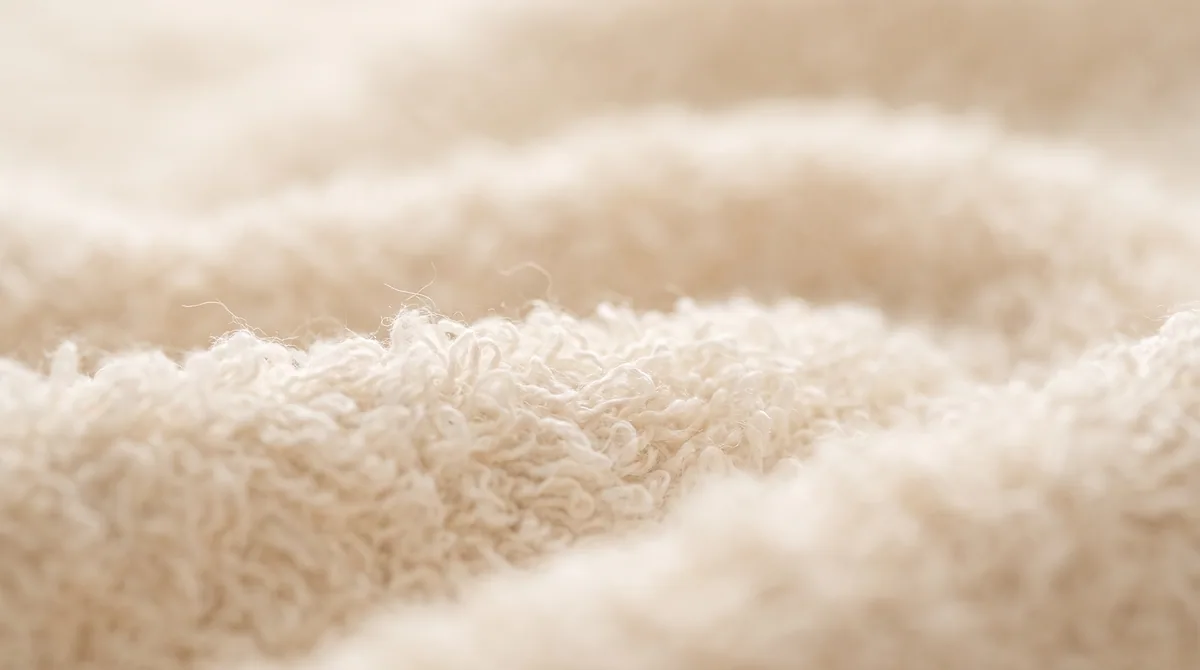
The “Egyptian Cotton” Label Problem
One critical caveat: the Egyptian cotton market is rife with mislabeling. A 2016 investigation found that the majority of towels labeled “Egyptian cotton” in major US retailers contained little or no actual Egyptian cotton.
What to look for:
- CmiA certification (Cotton made in Africa — legitimate Egyptian cotton certification)
- Oeko-Tex Standard 100 (at minimum confirms no harmful chemicals, though not origin)
- Price: genuine Egyptian cotton sets under $30 are almost certainly mislabeled
Turkish cotton has a lower mislabeling rate — partly because “Turkish cotton” can legitimately refer to the processing technique (not just origin), and partly because Denizli-based manufacturers have strong export certification infrastructure.
Shopping now? Here are direct picks: Turkish cotton towel set on Amazon and Egyptian cotton towel set on Amazon — both quality options at different price points.
My Recommendation
For most people: Turkish cotton.
The fast-drying advantage is genuinely practical (not just a marketing point), the durability is superior under frequent washing, and the improving-with-age quality means the investment compounds over time.
Exception: If you specifically love the plush, heavy-towel feel immediately out of the package — and you have good ventilation in your bathroom — Egyptian cotton delivers that better.
The ideal bathroom has both: Turkish peshtemals towels for everyday use and travel, one set of quality Egyptian cotton for the full spa experience.
FAQ
Is Turkish cotton or Egyptian cotton more expensive?
Egyptian cotton is typically 20–40% more expensive for comparable quality. However, genuine Egyptian cotton commands a premium that’s often not justified given widespread mislabeling.
Do Turkish cotton towels shrink?
Minimal shrinkage with cold wash/low heat dry. First wash may show slight shrinkage (3–5%),
then stabilizes.
Can you mix Turkish and Egyptian cotton towels?
Yes — many interior designers recommend this. Turkish towels for display and everyday use;
Egyptian cotton for the full plush experience.
How do I know if my Egyptian cotton is genuine?
Look for CmiA certification. If the label says “Egyptian cotton” but costs under $30 for a full set,
it’s almost certainly blended or mislabeled.
Which lasts longer?
Turkish cotton, under frequent washing conditions. The longer fiber structure resists pilling and
degradation better over time.
Ready to buy? See the best Turkish cotton towels on Amazon — and once you have them, how to wash Turkish towels keeps them soft for years.
This post contains affiliate links. If you buy through one of these links, we may earn a small commission at no extra cost to you. We only recommend products we genuinely believe are worth your money.