







Turkish towels come with a small secret that nobody tells you at checkout: they arrive at maybe 60% of their potential. The softness and absorbency that made you buy one don’t fully show up until a few washes in — and whether they show up at all depends almost entirely on how those washes go.
The good news: how to wash Turkish towels properly is easier than caring for regular terry towels, not harder. There are just three or four rules, one counter intuitive first step, and a short list of products to keep far away from the laundry. Here’s the whole routine.
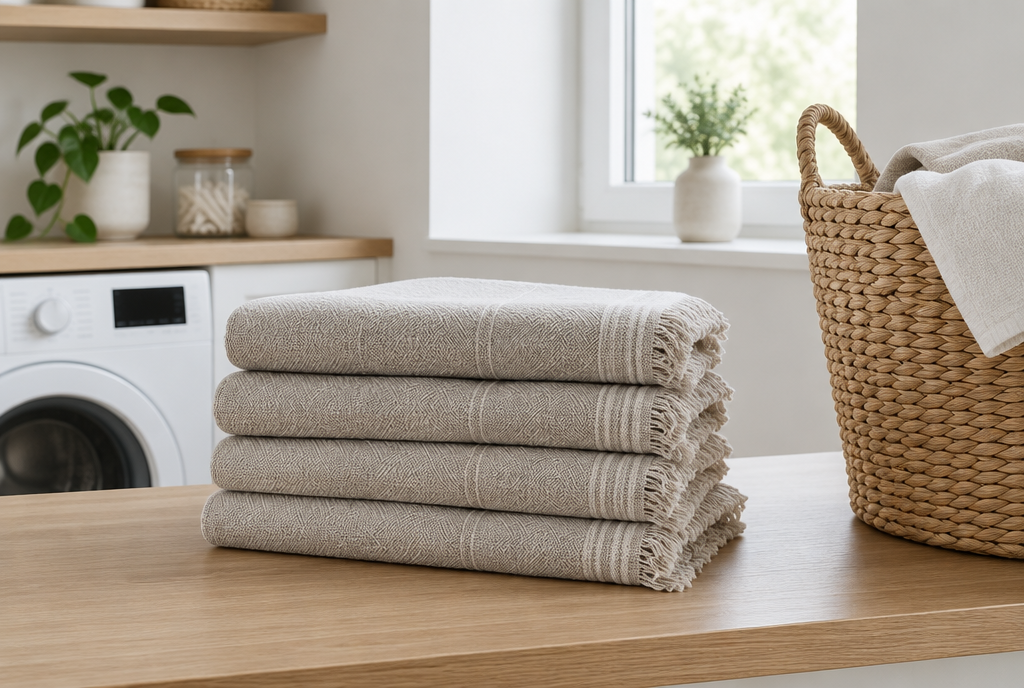
If you don’t have Turkish towels yet, this Turkish towel set is a solid starting point — long-staple cotton, holds up well after repeated washes.
The First Wash Is Different (Do This Before First Use)
New Turkish towels — especially flat-woven peshtemals — should be soaked before they’re ever washed. Fill a basin or clean sink with cold water, submerge the towel completely, and leave it for 12 to 24 hours. Then wash as normal.
This feels excessive. It isn’t. Turkish cotton fibers are long and tightly spun, and they arrive with their natural waxes and the tension of the loom still in them. The long soak opens the fibers and kick-starts absorbency — skip it, and the towel spends its first month seeming to push water around instead of drinking it. One overnight soak solves what would otherwise take ten wash cycles to fix.
If you’ve already used the towel without soaking it, no harm done: a few regular washes get you to the same place, just slower.
For detergent, use something gentle and pH-neutral — this gentle detergent works well for delicate cotton without stripping the fibers.
The Regular Routine
Wash cool or warm — 30–40°C / cold to warm setting. Hot water is the main reason towels stiffen and colors fade. Turkish cotton doesn’t need heat to get clean; it’s a low-pile or flat weave, so there’s far less fabric for grime to hide in than a thick terry towel.
Use less detergent than you think. Half the usual dose is plenty. Excess detergent doesn’t rinse fully out of cotton — it builds up in the fibers, and detergent residue is the number one cause of towels that feel coated, stiff, or mysteriously less absorbent over time. Mild, liquid, and unscented is the ideal profile.
Wash towels with towels. Zippers, hooks, and rough denim pull threads on flat weaves. A towels-only load (or towels with soft linens) keeps the weave intact for years longer. If a thread does pull loose someday, don’t yank it — snip it flush with scissors and the weave holds fine.
Skip the fabric softener. Always. This is the one non-negotiable. Softener works by coating fibers in a waxy film — the same cat-ionic coating that blocks capillary wicking — which is precisely how you ruin the two things Turkish cotton does best, absorbing water and drying fast. It’s the same reason we warned against it for linen sheets: natural fibers soften through use and washing, not through coatings. If your towels ever feel like they repel water, softener residue is almost always the culprit.
The fix for softener damage or hard-water stiffness: run the towels through a warm wash with one cup of white vinegar and no detergent, then a normal rinse. Vinegar strips the buildup and resets the fiber. Doing this once every couple of months is a good habit in hard-water areas regardless.

Drying: Where Softness Is Actually Made
Line drying is the traditional route and works beautifully — Turkish towels dry fast, which is half their point. But line-dried cotton can feel slightly crisp.
The best of both worlds: line dry until almost dry, then five minutes in the dryer on low, or simply tumble dry low the whole way. The tumbling motion is what fluffs the fibers; heat is what damages them. Low heat, and pull them out promptly.
Two things to avoid: high heat (shrinks cotton and shortens its life) and dryer sheets (same coating problem as fabric softener). Wool dryer balls, on the other hand, are genuinely useful here — they speed drying and soften mechanically, with nothing left behind on the fiber.
Between Washes
Turkish towels don’t need washing after every use — that’s another advantage over terry. Because they dry so quickly, they don’t develop the damp-towel mustiness that forces frequent washing. Hang them spread out (not folded over a hook) after each use, and washing every three or four uses is plenty. Your towels last longer, and so does your laundry schedule.
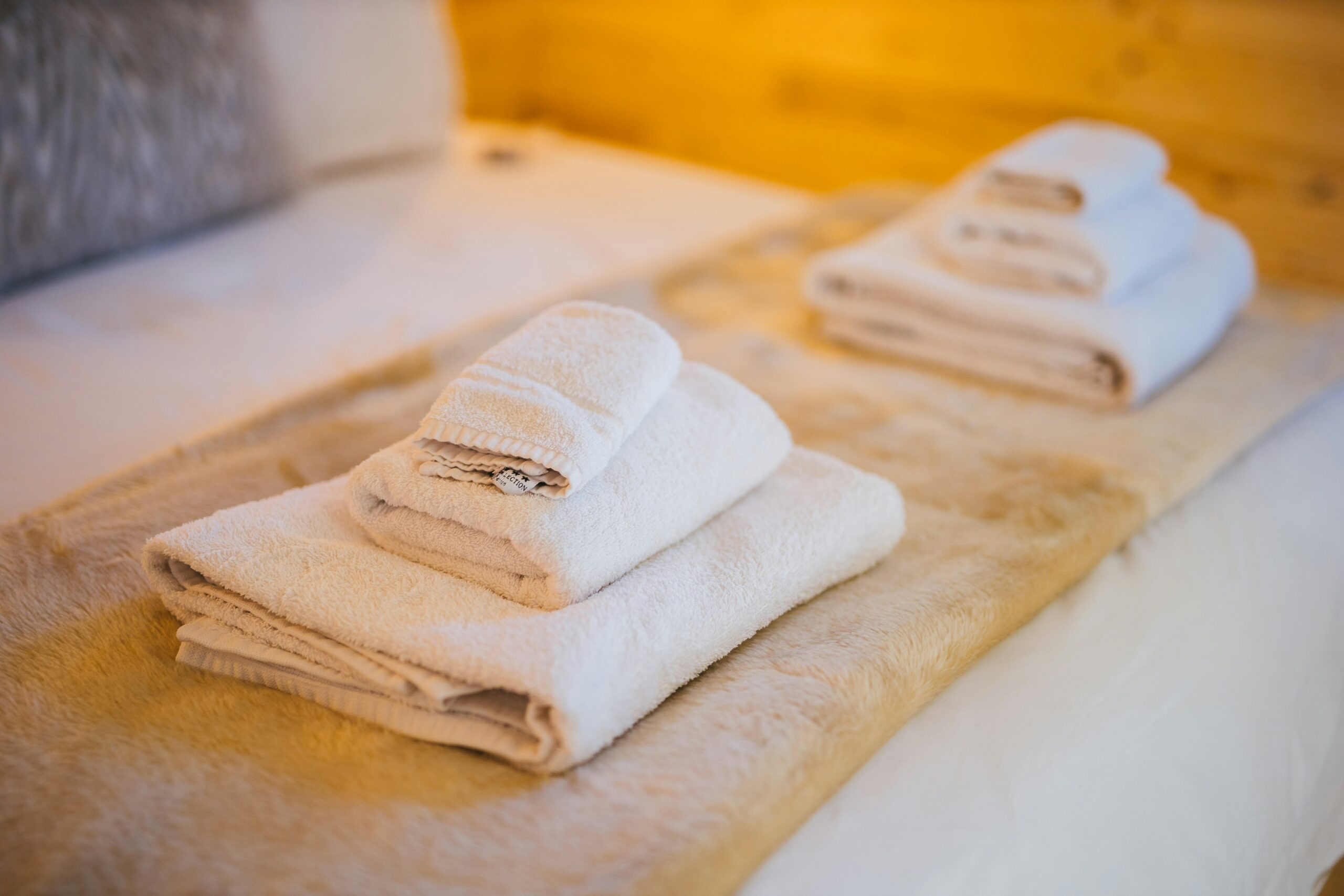
If you like the styled look, this is also where a proper fold earns its keep — a towel that dries fully and gets folded well stays fresh noticeably longer than one crumpled on a hook.
How Long Should They Last?
Cared for this way, a good Turkish towel is a 5–10 year object, and peshtemals often outlive that — they’re famously passed down in Turkish households. They’ll actually improve for the first year or two: softer, more absorbent, better drape. If you’re still choosing between options, our guide to the best Turkish cotton towels covers what separates the long-lived ones from the disappointments, and the Turkish vs Egyptian cotton comparison explains why the fiber behaves this way in the first place.
The Short Version
Soak overnight before first use. Wash cool with half the detergent. No softener, no dryer sheets, ever. Tumble dry low or line dry with a short tumble finish. Vinegar wash if they ever stiffen.
That’s the entire secret to how to wash Turkish towels — less a care routine than a list of things to stop doing. The towel handles the rest.
Before washing, make sure you have the right towels to begin with — see the best Turkish cotton towels on Amazon. And if you’re comparing types, Turkish vs Egyptian cotton breaks down the key differences.
This post contains affiliate links. If you buy through one of these links, we may earn a small commission at no extra cost to you. We only recommend products we genuinely believe are worth your money.