



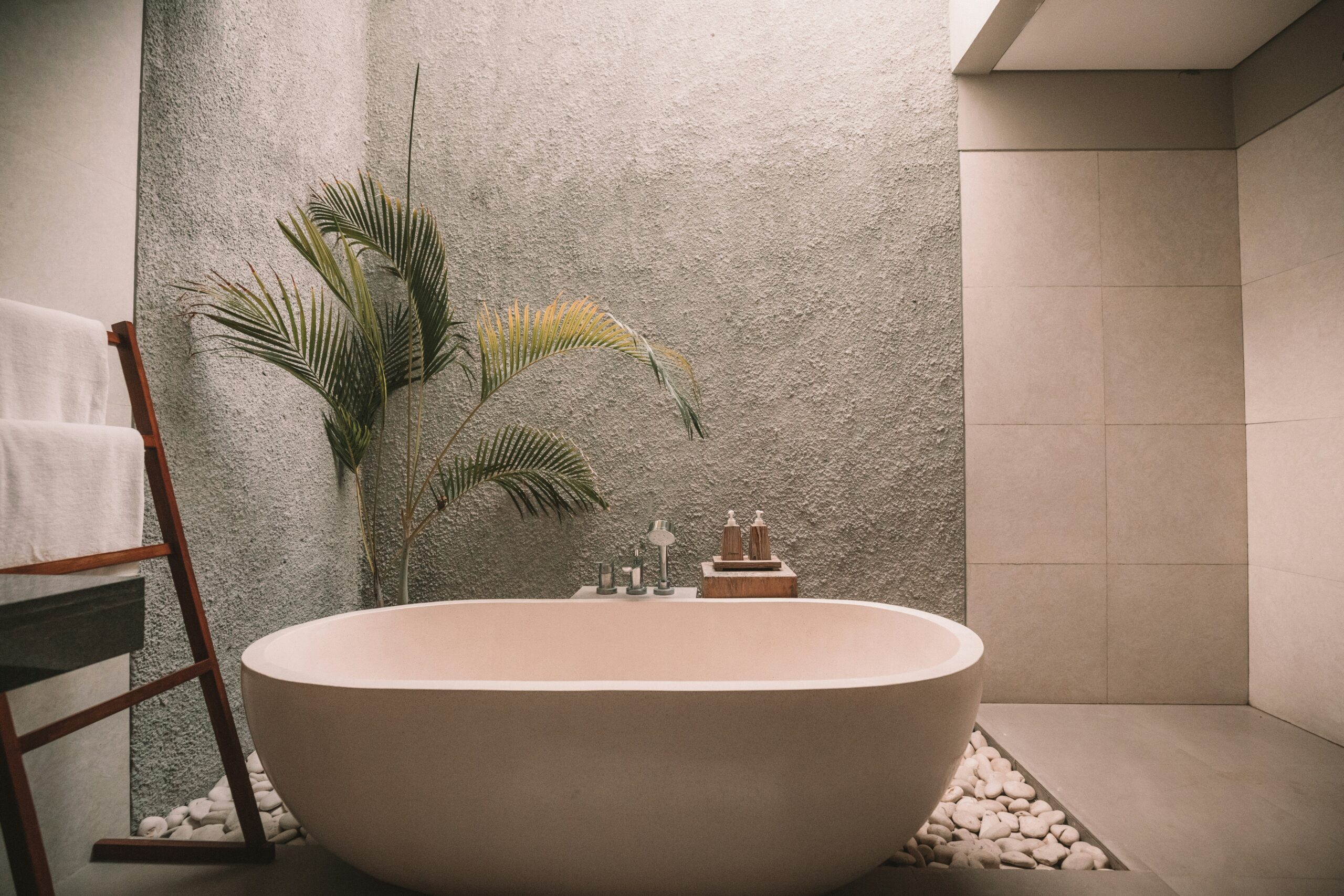
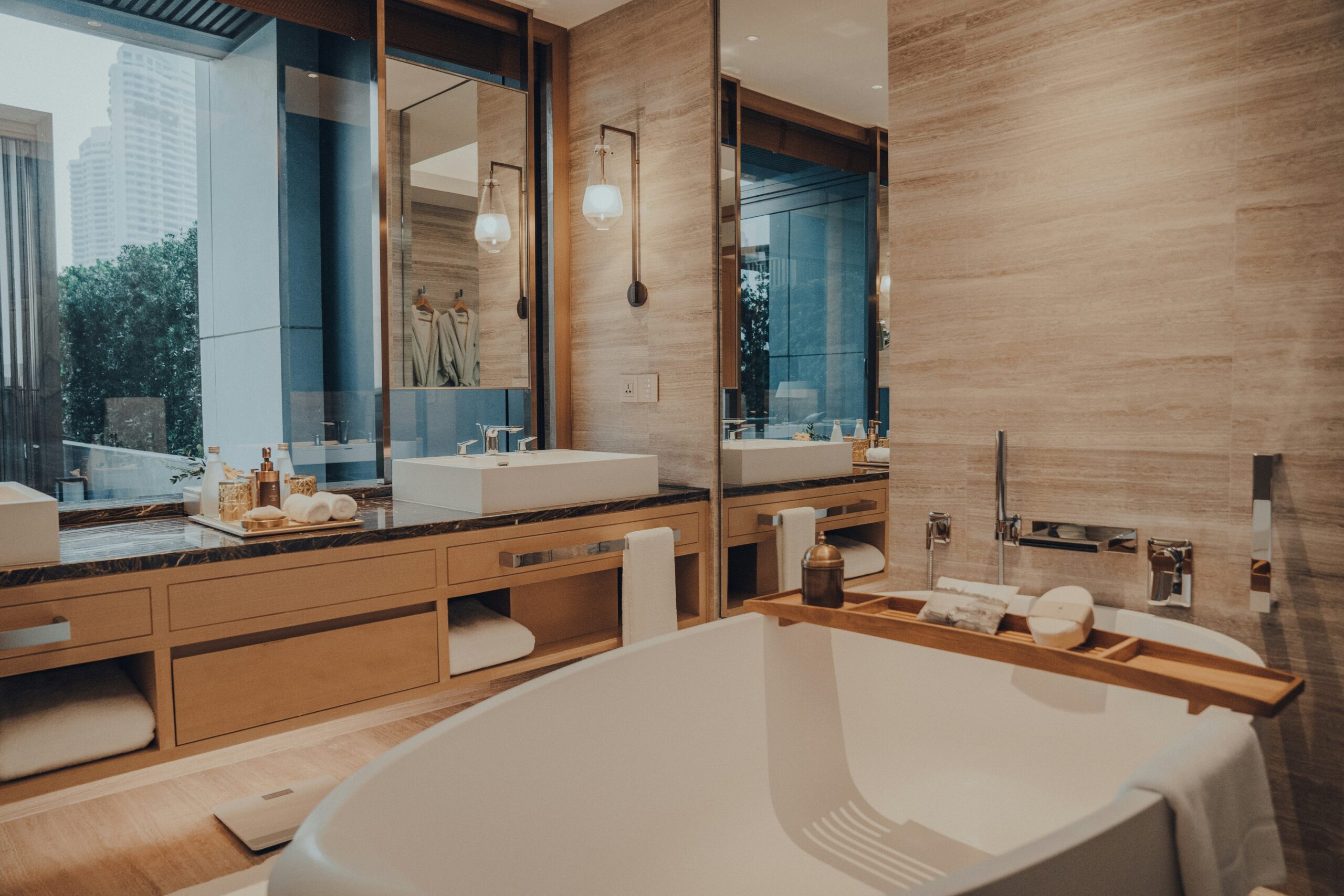
Walk into a good spa and pay attention to what you smell: not much, at first. Then eucalyptus, faintly. Maybe cedar, clean linen, a suggestion of something herbal. What you never smell is fragrance fighting something — no plug-in vanilla wrestling with humidity, no aerosol “ocean breeze” over stale air.
That’s the entire secret, and it’s why most attempts to make a bathroom smell like a spa fail. Spas don’t add strong scents; they remove bad ones and layer quiet ones. Both halves are copy-able at home, and the whole setup costs less than two months of plug-in refills.
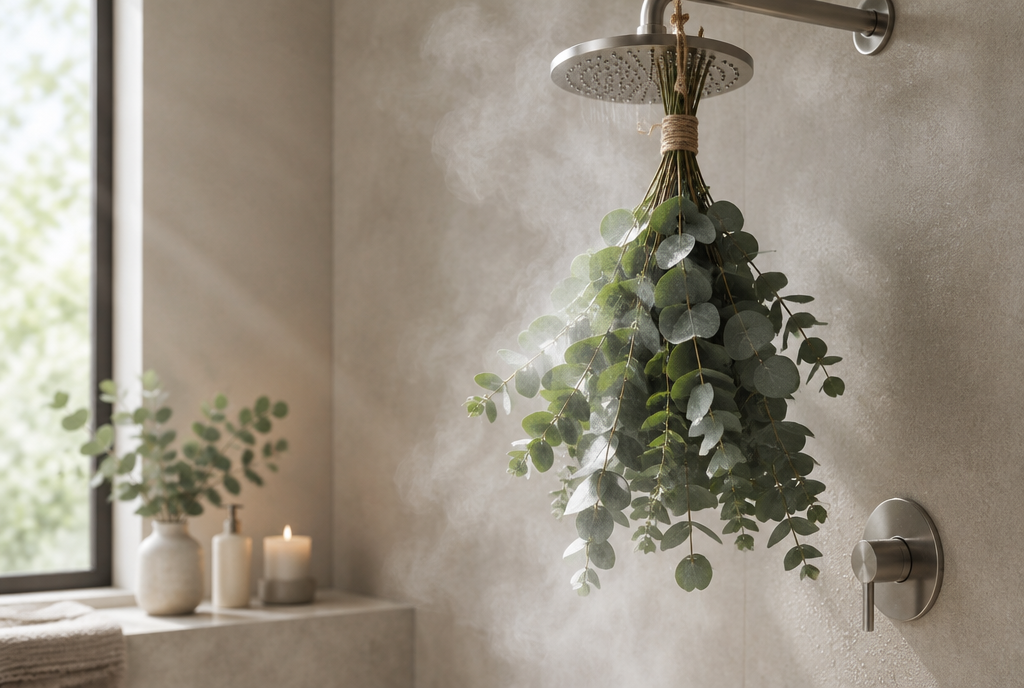
Step Zero: Fix the Air Before You Scent It
Scent layered over dampness reads as air freshener. Scent layered over clean, dry air reads as spa. So before buying anything fragrant:
Run the fan longer than feels necessary. Fifteen to twenty minutes after every shower, minimum. If your fan is decades old and sounds like it, a modern quiet fan is a bigger scent upgrade than any candle — humidity is where musty smells are born.
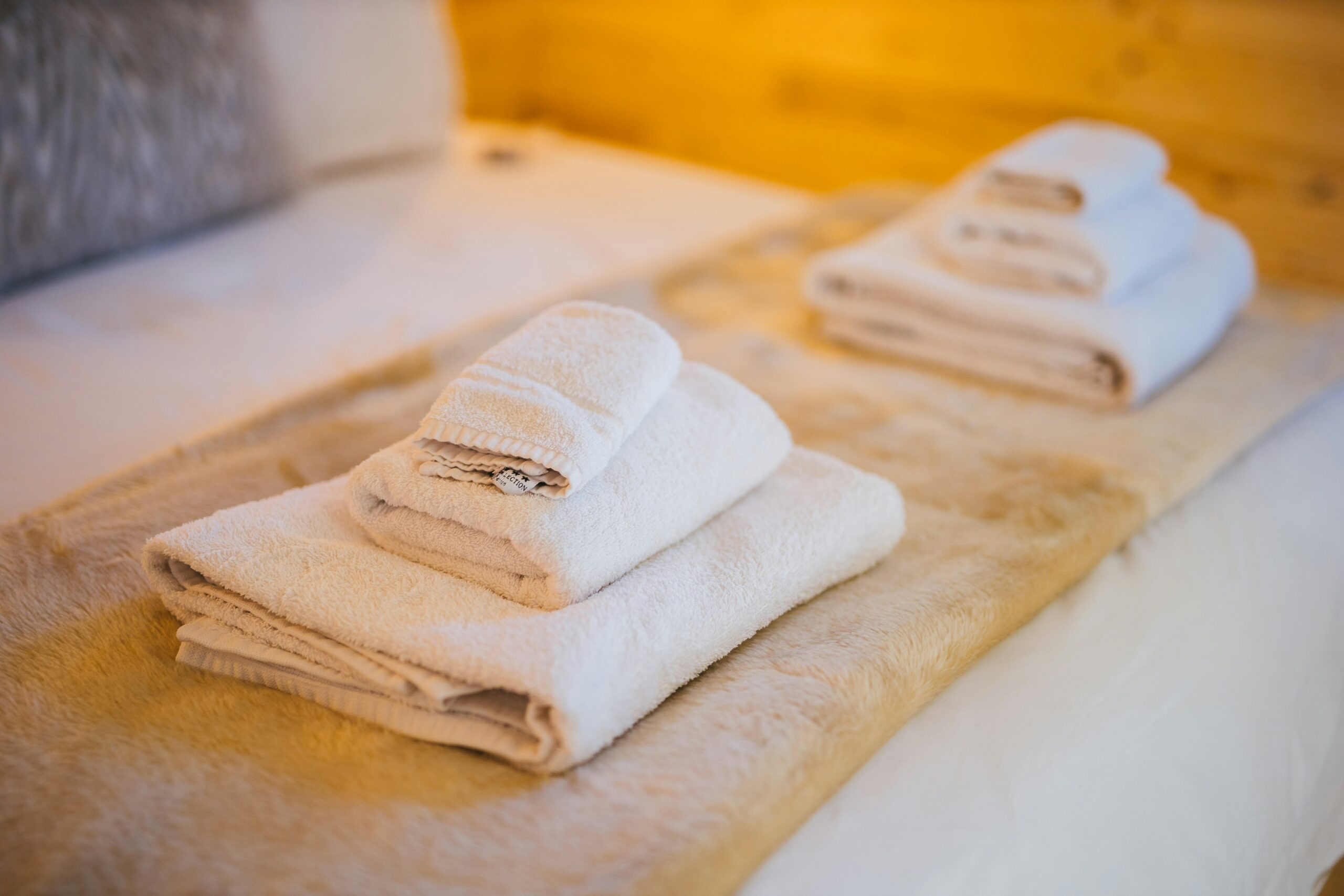
Get textiles fully dry between uses. Damp towels are the number one source of “bathroom smell.” Fast-drying towels hung spread out — not folded on a hook — change the baseline scent of the room more than anything you can buy in the fragrance aisle. This is quietly one of the best arguments for Turkish cotton, and if your towels have developed a musty note that survives washing, a vinegar reset wash fixes it.
Keep the drain honest. A monthly flush of hot water and baking soda followed by vinegar keeps the drain from contributing. Unglamorous, decisive.
With the air neutral, everything you add now gets to be the whole story.
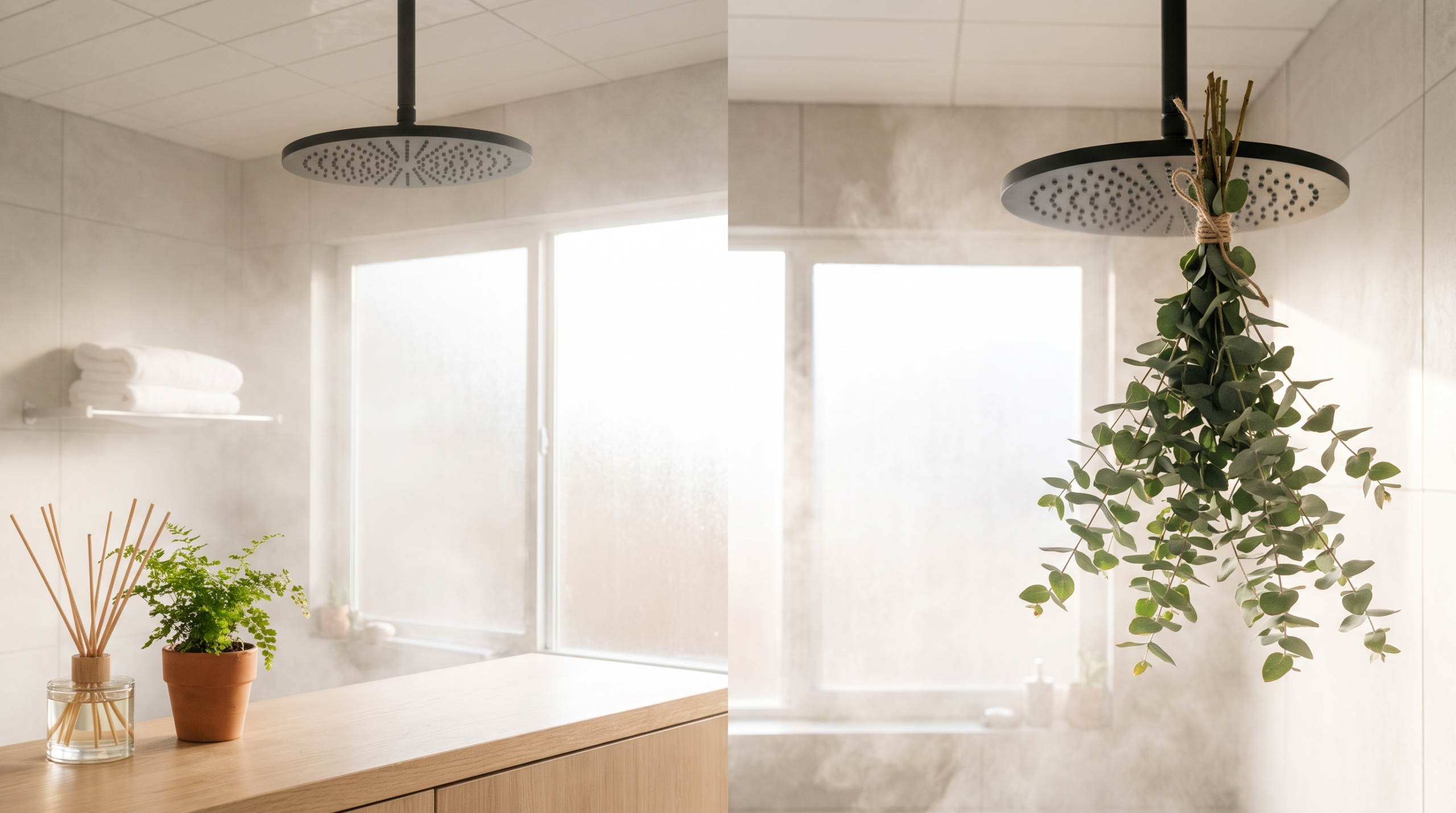
The quickest win: a fresh eucalyptus bundle tied to your shower head fills the bathroom with steam-activated scent every time you shower — no plug, no flame, no upkeep.
The Eucalyptus Shower Trick (Start Here)
The single highest-impact move, and it costs about ten dollars: a fresh eucalyptus bundle tied to the shower head, hanging behind the spray, not in it. Shower steam releases the eucalyptus oils, and the whole bathroom smells like the steam room at a resort — for two to three weeks per bundle.
Look for “shower eucalyptus” or fresh silver dollar eucalyptus; crush the leaves gently with a rolling pin before hanging to open the oils. When a bundle fades, it retires into a vase and keeps working at lower volume for another month. This one trick converts more people than everything else in this guide combined.
Layer Two: A Passive Scent That’s Always On
Spas smell consistent because something is always quietly diffusing. At home that role goes to one of two things:
A reed diffuser is the maintenance-free option — no flame, no power, steady output for two to three months. Placement matters more than brand: near the door or the towel shelf, where air moves, not on the far windowsill. Flip the reeds weekly.
An ultrasonic essential oil diffuser gives you control instead: run it during baths, off otherwise, and change scents by season. A few drops of eucalyptus, lavender, or cedar wood oil is the entire operating cost.
Either way, the scent families that read as “spa” rather than “candle store” are consistent: eucalyptus, cedar, sandalwood, lavender, white tea, cotton/linen. What reads as the opposite: fruit, dessert, anything with “fantasy” in the name. When in doubt, choose the scent that smells like a plant rather than a food.
Layer Three: The Ritual Scent
The final layer only appears when you’re actually in the room — and that contrast is what makes a bath night feel like an event.
A candle in the spa families — cedar, fig, vetiver, linen — lit only during baths, ideally within reach on the bath tray rather than across the room. The scent throw of one good candle in a small closed bathroom is enormous; this is the one room where the small size is genuinely enough.
Scented bath salts or shower steamers put fragrance directly into the steam. Eucalyptus-mint steamers on the shower floor are the weekday shortcut to the same effect as the bath.
The layering logic, all together: neutral air always, one quiet passive scent always, one richer scent only during the ritual. Three layers, never competing, exactly like the spa does it.
What to Skip
Plug-in air fresheners and aerosol sprays are engineered to be noticed, which is precisely the wrong goal — they announce themselves, then flat line your nose to everything subtler. Gel cones and “odor eliminator” beads solve a problem you won’t have once the air and towels are handled. And skip the urge to run five scents at once; a spa smells like one idea, not a potpourri aisle.
The Whole Setup, Summarized
Dry air and dry towels first. Eucalyptus on the shower head. One reed diffuser or oil diffuser running quiet. One good soy wax candle reserved for baths. Total damage: roughly $40–60 to start, a few dollars a month to maintain — and a bathroom that smells expensive specifically because nothing in it is trying hard.
If you’re building the full effect, scent is the fastest win of the larger spa bathroom checklist — the change guests comment on before they’ve noticed anything you can see.
For the bigger picture, see our guide to spa bathroom ideas at home — and the everything shower routine to make the most of it.
This post contains affiliate links. If you buy through one of these links, we may earn a small commission at no extra cost to you. We only recommend products we genuinely believe are worth your money.