


This rug size guide exists because a rug that’s the wrong size is the single most common decor mistake — and the easiest one to spot, even if you can’t say why a room feels “off.” Too small, and it looks like a bath mat that wandered into the living room. Too big, and it swallows the furniture and makes the whole space feel cramped instead of grounded.
The good news: rug sizing isn’t a matter of taste. It’s a formula, and once you know it, you’ll never eyeball a rug purchase again.
The Rule That Fixes 90% of Rug Mistakes
At minimum, the front legs of every major piece of furniture should sit on the rug. Ideally, all four legs do. A rug that only the coffee table touches isn’t anchoring the room — it’s decorating the floor around the furniture instead of under it.
Leave 12–18 inches of bare floor between the rug’s edge and the wall. Less than that and the room feels boxed in; more than that and the rug starts to look lost in the middle of the floor.
Rug Size Guide by Room
Living Room Rug Size Guide
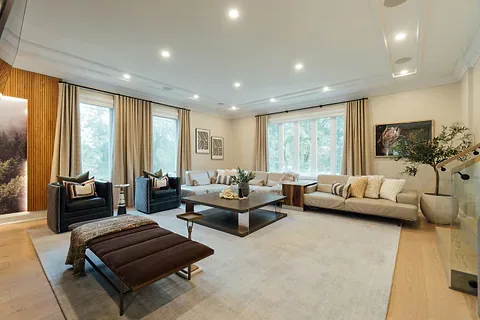
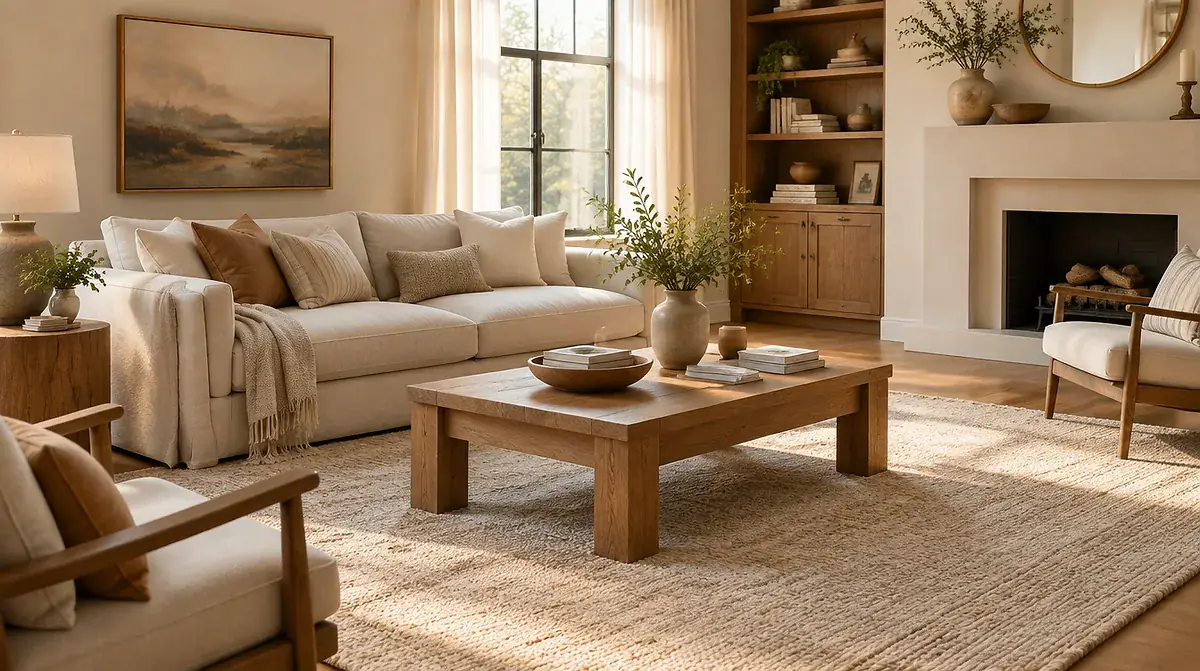
The sofa and chairs should all have at least their front legs on the rug — ideally all four. For a standard living room seating arrangement, that usually means an 8×10 or 9×12 rug. A 5×7 almost never works as the only rug in a living room; it reads as a small accent piece, not the anchor.
Bedroom
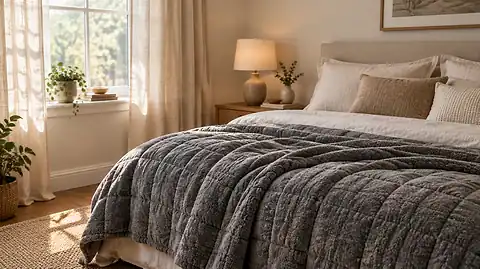
The rug should extend at least 18–24 inches past the sides and foot of the bed, so your feet land on rug, not cold floor, the moment you get up. For a queen bed, that’s typically an 8×10 rug positioned so it peeks out evenly on both sides. For a king, size up to 9×12.
Dining Room
Every chair needs to stay on the rug even when pulled out to sit down. Measure your table, add 24–30 inches on all sides to account for the pulled-out chairs, and size the rug to that total — usually a 9×12 for a standard 6-seat table.
Entryway or Hallway
Runners are sized by the hallway’s length, not a formula — leave about 4–6 inches of bare floor on each side, and stop 6–10 inches short of doorways so the rug doesn’t catch the door. For a full styling pass on this space, see our small entryway ideas guide.
Rug Size Guide: Quick Reference Chart
| Room | Typical Size | Rule of Thumb |
|---|---|---|
| Living Room | 8×10 or 9×12 | Front legs of all seating on the rug |
| Bedroom (Queen) | 8×10 | 18–24″ past the sides and foot of the bed |
| Bedroom (King) | 9×12 | Same overhang, larger bed footprint |
| Dining Room (6-seat) | 9×12 | Chairs stay on rug when pulled out |
| Entryway / Hallway | Runner, sized to space | 4–6″ bare floor on each side |
5 Rugs Worth Buying — By Situation
1. Ruggable Washable Area Rug — Best for Pets and Kids
A two-piece system — a washable top layer over a non-slip pad — that comes apart and goes in the machine when something spills. It’s the rug editors recommend most often for households that can’t babysit a rug, and it holds a crisp pattern better than most washable competitors.
Best for: living rooms with pets, kids, or both. Check the current price on Amazon →
2. Safavieh Area Rug — Most Trusted Mainstream Brand
Safavieh has been making rugs since before Amazon existed, and it shows in the consistency — sizing runs true, colors match the listing photos, and the collections span everything from traditional Persian-style patterns to flat-weave modern. The safest pick when you’re not sure what style commitment you’re ready to make.
Best for: buyers who want a dependable, no-surprises purchase. Check the current price on Amazon →
3. NuLOOM Jute or Moroccan Shag Rug — Best for Texture
NuLOOM owns the boho-and-organic-texture lane — chunky jute weaves and Moroccan-inspired shag patterns that add warmth a flat-woven rug can’t. Jute styles are naturally durable and forgiving in high-traffic rooms; shag styles are better reserved for bedrooms where bare feet matter more than easy cleanup.
Best for: rooms that need texture and warmth more than pattern. Check the current price on Amazon →
4. RELEANY Washable Area Rug — Best Budget Pick
Consistently one of the top-selling rugs on Amazon, and the reason is simple: low-pile, machine-washable, and priced low enough to try a bold pattern without a big commitment. Not built for a decade of daily traffic, but a smart choice for a first apartment, a rental, or a room you’re not ready to invest heavily in yet.
Best for: renters, first apartments, or testing a pattern before committing. Check the current price on Amazon →
5. RUGPADUSA Rug Pad — The Purchase Everyone Skips and Shouldn’t
Not a rug, but the accessory that determines whether the rug above actually works: a pad stops slipping, protects hardwood from wear marks, and adds the cushioning that makes an 8×10 feel like a real investment instead of a thin layer between your feet and the floor. Skipping the pad is the second most common rug mistake, right behind wrong sizing.
Best for: literally every rug on this list — buy one alongside whichever rug you choose. Check the current price on Amazon →
FAQ
Can a rug be too big for a room?
Yes — if it touches the walls or leaves almost no bare floor visible, the room loses definition and feels smaller, not larger. Leaving that 12–18 inch border is what keeps a large rug from overwhelming the space.
Should the rug go under the whole sofa or just the front legs?
Either works. All four legs on the rug reads as more intentional and “finished”; front-legs-only is the acceptable minimum when budget or room size won’t allow a bigger rug.
What size rug goes under a king bed?
9×12 is the standard recommendation, positioned so it extends evenly past both sides and the foot of the bed.
Do I really need a rug pad?
For hardwood, tile, or any hard flooring — yes. It prevents slipping, protects the floor finish, and roughly doubles how plush the rug feels underfoot.
The Bottom Line
That’s the whole rug size guide in one line: measure the furniture first, not the room. Every formula above starts from the piece the rug needs to anchor, not the empty floor space — get that relationship right and almost any rug you pick will look intentional.
Once the rug is sized, the rest of the room falls into place faster — our guides to styling a coffee table and warm minimalism cover what typically goes on top of it.
This post contains affiliate links. If you buy through one of these links, we may earn a small commission at no extra cost to you. We only recommend products we genuinely believe are worth your money.